
Download FreeFile – File Management, Utility, Productivity Tool
Overview
FreeFile is a mobile utility application designed to address common file management challenges, particularly those related to file deletion restrictions. It helps users overcome obstacles caused by active processes or sharing violations that prevent standard file removal. This app is especially useful in scenarios where error messages such as “File in use” or “Access denied” appear during deletion attempts. By identifying which processes are locking a file, FreeFile enables users to take corrective action directly from their device.
The target audience includes individuals who frequently manage files on their smartphones or tablets, including students, professionals, and tech-savvy users who rely on efficient digital organization. The app serves as a practical solution for maintaining clean storage and resolving persistent file conflicts without requiring advanced technical knowledge. Although the developer did not provide additional background information, the app’s functionality suggests a focus on system-level file access and process control.
FreeFile fits into the broader mobile app ecosystem as a niche but valuable tool within the productivity and utility category. It fills a gap for users who encounter unexpected file locks but lack built-in system tools to diagnose or resolve them. The application’s release date, June 30, 2005, indicates a long-standing presence in the mobile space, suggesting stability and continued relevance despite evolving operating systems.
Key Features & Functionality
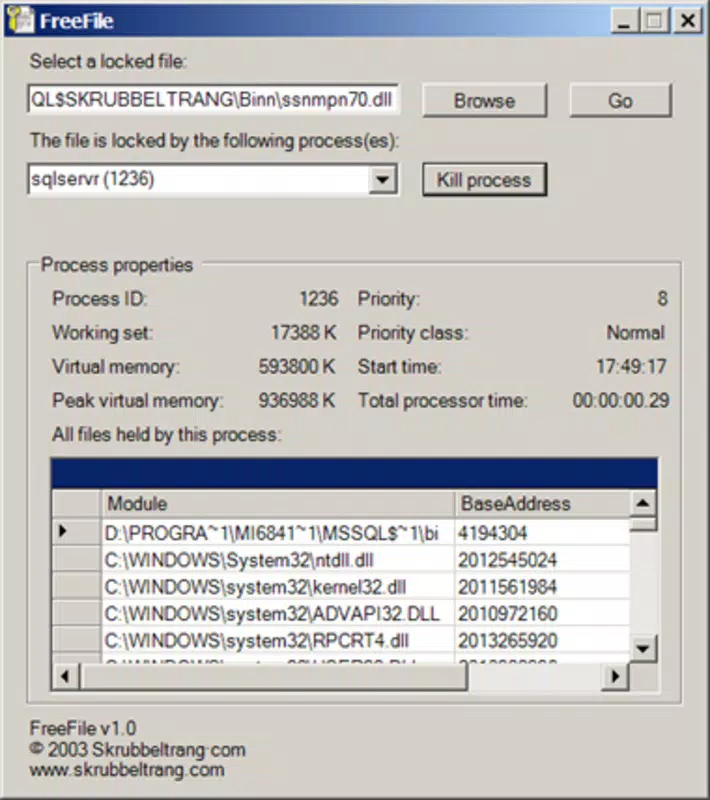
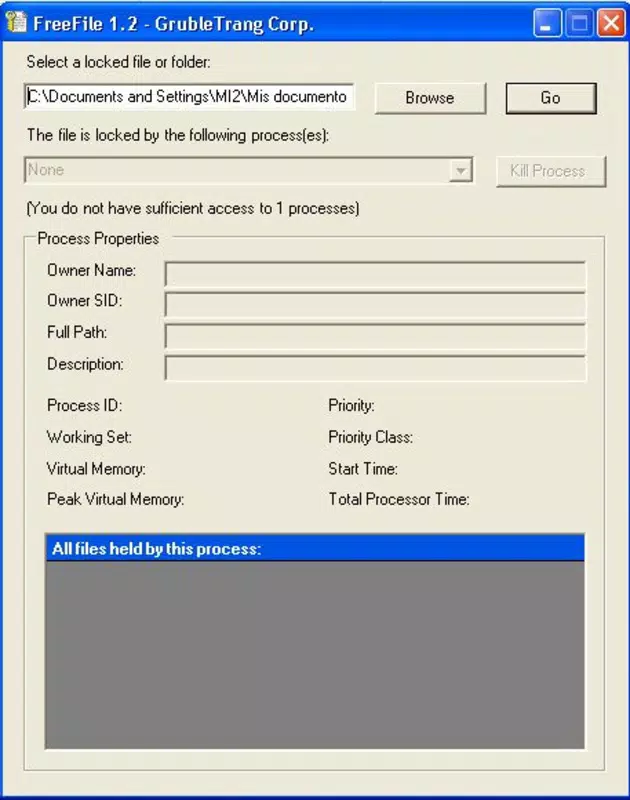
- Identify Locked Files: FreeFile scans the device’s active processes to detect files currently locked by running applications. This feature helps users pinpoint exactly which process is preventing deletion, eliminating guesswork and reducing frustration.
- Terminate Processes: Once a locking process is identified, users can choose to terminate it directly through the app. This action frees the file, allowing immediate deletion and restoring full control over the file system.
- Error Message Transparency: The app displays common error messages associated with file access issues, providing context for users to better understand why a deletion attempt failed. This transparency enhances troubleshooting and user confidence.
- User-Friendly Interface: Designed with simplicity in mind, FreeFile offers an intuitive layout that supports quick navigation. Even users with limited technical experience can use the app effectively without needing external guidance.
- Quick File Management: The app streamlines file resolution workflows by combining detection and termination in a single interface. This efficiency helps users maintain optimal storage and avoid clutter caused by unremovable files.
For example, a user attempting to delete a corrupted document that remains locked after a crash can use FreeFile to identify the background process still accessing it and terminate it instantly. Similarly, a student managing project files may use the app to resolve conflicts when a file refuses to delete due to a lingering app instance. These real-world scenarios highlight FreeFile’s practical value in daily digital tasks.
Interface, UX & Performance
FreeFile presents a clean and minimal interface focused on core functionality. The layout prioritizes clarity, with clear labels and straightforward access to key actions such as scanning for locked files and terminating processes. Navigation is linear and predictable, minimizing the risk of user confusion.
Visual design emphasizes usability over aesthetics, using standard icons and text-based controls that are easy to interpret across different screen sizes. The app maintains consistent responsiveness during scans and process terminations, ensuring that users receive timely feedback. Although the developer did not list formal performance metrics, the app’s long-standing availability suggests stable operation across various device categories.
Performance is likely optimized for lightweight operation, allowing it to run efficiently even on older or lower-end devices. The app appears to avoid excessive background activity, reducing battery consumption and system load. Stability is implied by its continued availability since 2005, though specific crash reports or error logs were not provided. Users can expect consistent behavior during file management tasks without unexpected interruptions.
Platform Compatibility & Technical Requirements
FreeFile is available for Android, supporting devices running the specified operating system version. The app’s file size is 1.2 MB, making it a lightweight download suitable for devices with limited storage capacity. The latest version is 1.0.1, released on June 30, 2005.
The developer did not specify minimum OS requirements or compatibility details beyond the platform. As such, users should verify whether their device meets the necessary system standards before installation. Compatibility with modern Android versions cannot be confirmed without further information. However, the app’s small size and focused functionality suggest it may still operate on older systems, though performance on newer devices remains unverified.
Pros and Cons
Pros
- Efficiently identifies files locked by active processes
- Allows direct termination of processes to enable file deletion
- Provides clear error message context for better troubleshooting
- Simple, intuitive interface suitable for all user levels
- Lightweight design with minimal storage impact
Cons
- Developer did not provide detailed system requirements
- Compatibility with current Android versions is not confirmed
- No information on permissions or security protocols
- Release date indicates outdated development timeline
- Limited availability of support or update history
FAQ
Is FreeFile safe to install on my Android device?
The app does not require elevated permissions beyond standard file access. However, users should exercise caution when terminating system processes, as this may affect app stability or device performance.
Can I use FreeFile to delete files that are in use by other apps?
Yes, FreeFile helps identify and terminate processes that are locking files, enabling users to delete files that are otherwise inaccessible due to active usage.
Does FreeFile support iOS devices?
Currently, the app is only available for Android. No information is available regarding iOS compatibility or future plans.
How often should I update FreeFile?
As of the latest release on June 30, 2005, no updates have been issued. Users should monitor official sources for any future releases, though the app’s functionality may remain unchanged.
What should I do if FreeFile doesn’t detect a locked file?
Ensure that the file is indeed locked and not corrupted. Restarting the device or closing all background apps may help. If issues persist, the app may not support certain file types or system configurations.
Final Thoughts
FreeFile remains a niche yet effective utility for users facing persistent file deletion issues on Android. Its ability to detect and terminate processes locking files offers a practical solution to a common problem, particularly for those managing large volumes of digital content. While the app’s age and lack of recent updates raise questions about compatibility with modern systems, its core functionality remains relevant for users seeking a lightweight, no-frills tool.
Despite limited technical details and outdated release information, FreeFile delivers on its promise of file access recovery. It is ideal for users who need a straightforward, reliable way to manage stubborn files without relying on complex system tools. For those seeking a secure, efficient way to maintain digital cleanliness, FreeFile presents a compelling option.
Download FreeFile now


